
Thursday, November 24, 2011


Saturday, October 29, 2011
Apartments
Last week, Dave and I viewed two apartments.


The first apartment was a stucco building in view of a
cemetery. There was a stone owl on the roof, which Dave explained was meant to
scare away real flesh-and-feather owls and evil spirits.
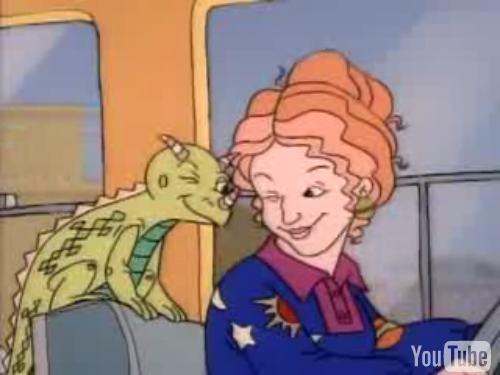
We were greeted by an older man with a Magic School Bus
T-shirt. Until that moment I had forgotten that Magic School Bus and Miss
Frizzle existed. Do you suppose she’s married now? I should have asked the
landlord, since he seemed to be a diehard Frizzle Fan.
We passed a tiny front yard full of Fisher-Price toys
(probably belonging to the landlord) and followed the landlord into the
building. The first sound I heard was the wail of a crying infant.
“Already?” I sighed.
After three flights of stairs, we reached the Lucite crystal
door handle of our apartment. Inside, the dark hardwood floors were newly installed
and recently waxed. The powdery walls were freshly whitewashed and blinding.
Every surface was fuming. I looked to the windowsill, where a bottle of Orange
Glo, Windex, Lysol, and a box of Raid conspired. I slowly quickly became
unpleasantly intoxicated by household chemicals. The window panes beyond the sill
displayed the somber view of a cemetery.
The landlord began to glide his Swiffer mop around the
parameters of the living area.
“I just discovered Swiffer mops,” he explained. “They’re amazing.”
We opened the bedroom closet, which had been nonsensically
whitewashed from top to bottom. I began to suspect that a heinous crime was
being covered up in this apartment.
“What do you think?” Dave asked.
“I can’t think,” I responded as 1,966,254 of my brain cells fizzled
to a combustible pulp in a single second. Dave informed me that my face was
turning unusually red.
“Do you have any questions?” asked the landlord from the other room, swiffing
his Swiffer.
“Can I paint it?” I asked.
“That depends. I don’t want you painting the walls some
obnoxious color, like black. Just give me a color and I’ll tell you if you can
paint it.”
I suggested yellow as the most inoffensive color I could produce
without a functioning cerebellum, and permission to paint was granted.
“Yellow,” he said thoughtfully. “I actually like yellow.
That’s nice.”
The kitchen was green and yellow, with appliances that were
older than my parents. I glanced at the stove, missing two spiral burners on the
range.
“Does the stove work?” I asked.
He told us it did, and to prove it, he set his Swiffer
against the counter and turned on the gas. I cringed, expecting the volatile apartment
air to ignite. Luckily, it did not.
The landlord showed us the inside of the refrigerator, which
seemed to have yellowed with age like a fine artisan cheese.
Dave and I thanked the landlord and took the forms for the
apartment to the car. We drove around the area, admiring the parks, the ponds, and
the proliferation of Dunkin Donuts establishments. There was a nice indie movie
theater and a university, but otherwise the area was rather barren.
We talked ourselves into the apartment,
which was pretty reasonable for our price range.
Just as we came to a conclusion, Dave’s phone rang and the
landlady of a studio apartment invited us for a viewing.
Perhaps I was still loopy from the first tour, but the
second apartment seemed great even though it was in the basement of somebody’s
house. Perhaps it was the neutral aroma in the air, or the owner’s furniture
filling the rooms, but I actually could imagine this apartment sustaining life.
Little ceramic mushrooms decorated the fully-functional stove.
The couple that lived there had a closet full of board games
and a hallway stacked with DVDs and CDs. Dave and the owner bonded over a board
game. In the end, we were chosen to be the lucky tenants because of Dave’s good
taste in obscure board games.
I imagined someone viewing the first apartment, chatting ecstatically
with the landlord about the superiority of the Swiffer and discussing
educational television. Somewhere out there is the ideal tenant for that
place, too.
Wednesday, October 12, 2011
A Spoonful of Neutrons

I know a precocious young boy with an IQ of bazillion. One day he walked up to me at my retail job and said, "Let me guess: this is your holiday job. You graduated from college and you work here?"

I recently spent a long, intimidating ride home eating ice cream with this young fellow. As usual, he made me question the value of my college education as I stuttered out answers to his questions with my palms sweating profusely. After spewing out a mouthful of scientific trivia, he said, "It's amazing what you can learn on Yahoo, isn't it?"
At one point we argued fiercely about whether zombies would be considered human and attempted to draw parallels between cells and viruses. We discussed the probability of the apocalypse in 2012 and whether the local drive-in movie theater would bother tacking up a “Closed Forever” sign in the event of such a global catastrophe occurring at the end of the season.
He asked me many questions, some with familiar answers,
others which merely baffled me.
Do you know how much a spoonful of neutrons would weigh on
Earth?
Do you understand how the Mayan calendar works?
Do you know any “yo mama” jokes?
Did you know that a virus isn’t a living cell?
In fact, I did know that a virus isn’t a living cell, thank
you very much. So that is one point for me against an elementary school child. You think you can beat me at this game? There must have been at least one biology class
that I did not spend drawing cartoons of myself sleeping.

The really shameful thing is that I don't know any yo mama jokes off the top of my head. Not even one.
Sunday, October 2, 2011
Cell Phone Pictures
My mother is having a difficult time with her new cell
phone. The keyboard makes too much noise, texting quickly is complicated with the
buttons in different places, and the icons have moved around only to spite her.
She covets my antiquated phone of yore in all of its low-battery glory. She wants
to trade her sparkling new phone for my elderly one.
Will lose all my pictures in the process of switching? Just
in case, here are a few masterpieces worth preserving, save some snapshots of pointy
men’s shoes and expensive upholstery fabrics. I’ll also spare you the site of
me waking up from my wisdom teeth surgery, still high on laughing gas with
gauze bulging from my tingling lips.
 |
| The Lunchables of the Jewish community, now available at your local Italian grocer. I will eat it in a box and I will eat it with a fox. |
 |
| Inspiration for a fan fiction I would like to write. |
 |
| This is the commemorative cookie cake of my senior year of college. It tasted like yellow dye and accomplishment. |
 |
| Speaking of hairy dogs, Rene Magritte and I have the same taste. (Pomeranians are delicious.) |
 |
| A frisky Native American in front of my grandfather's grave. Perhaps someday I, too, will be inhumed behind his enormous erection. |

 |
| Perhaps my great great great great great great great great grandfather would look like this debonair actor from the Last of the Mohicans in casual attire. |
 |
| This assesses the damage done to my bike after I ran over a bottle of Gatorade, fell onto the blacktop, and nearly got flattened by a car full of old people. |
 |
| Golf outfits are just as silly now as they were one hundred years ago. |
Sunday, September 25, 2011
Driver's Ed
I’m sitting in a desk in my old high school and surrounded
by sixteen year olds. To my surprise, I am not the oldest person in the room. One
guy in the back is probably my mom’s age.
The instructor pops a VHS into the rolling television on the
cart and presses play. Cheesy music invoking the eighties quickly fills the
room. The dark screen flickers.
A boy is at an arcade, playing a SEGA racing game. He
sways back and forth with excitement as his red sports car sweeps skillfully through
the course. But then it becomes a real car, and suddenly the car is no longer
invincible. This isn’t a game anymore. This is LIFE.

The narrator walks solemnly through a junkyard of crumbling
automobiles stacked in ominous towers. He places his hand on a car folded
accordion style, knowing that he looks deep and brooding yet boyishly attractive.
He knows that, because of this, kids will listen to his message. He presses his
neatly combed hair aside and says to us, “Driving is just like a video game,
but you’re playing the game of YOUR LIFE.”
These chilling words introduce a scientific study on the
recently discovered effects of alcohol on driving. A number of brave Canadians
volunteer to drive a car through an obstacle course lined with cones in the
wastelands of Canada, and then get hammered and drive through that same obstacle
course again.
The experiment begins with the group of strangers grouped
casually in the parking lot. Each of the participants slips into the driver’s
seat and glides through the meandering path of cones, swerving gracefully to
avoid a padded wall.
When they return, they sip from plastic cups of beer
administered by scientists and chat civilly. After consuming their first
serving of beer, they weave through the course with a few minor scrapes. A
second round of beers is passed around. The participants laugh and tell stories
that are hilarious. They drive around the course again, tipping over a few
unlucky cones.
The method repeats itself until their BACs reach the legal
limit, .08. The horde of participants cheers as they take turns funneling beer
into each other’s mouths. A male participant gets into the car with his beer
helmet still strapped to his head and pounds the gas pedal, careening into the
padded wall and laughing uncontrollably. A whole family of cones is sacrificed
to science and one remorseful doctor weeps. The male participant continues to
drive around the bends of the course with the padded wall still attached to the
front bumper and fails to stop at the end, speeding blindly onward to a remote
town in the Yukon with two flailing scientists trailing behind.

The narrator appears once more in the junkyard of woe and
tosses his cardigan casually across his broad, muscular shoulder. “Teens have too
much confidence. They think they're invincible. Do you really think it won’t happen to
you?” he asks in an accusing tone.
The scene shifts to the living room of an orange traffic
cone that lost a child during a Canadian study on the effects of alcohol on automobile
drivers. “He was a good cone,” she says tearfully.
The boy innocently playing the racing game suddenly finds
himself in a pair of goggles meant to simulate the blurry vision of a drunk
driver. He swerves from wall to wall of the simulated Grand Canyon, loses
control of his wheel, falls out of the padded seat onto the arcade floor. He
rolls on the dusty concrete desperately trying to ply the goggles from his face,
but they are permanently fused to his skin.
The narrator enters. He says, “I want to play a game. The game of your LIFE.”
The boy screams and uselessly tears at the goggles.
“The only thing that will remove the goggles is time,” says
the narrator as he crosses the arcade. He casually tucks his hands into the pockets of his pleated pants. The goggles
are locked to the gamer’s face until the next morning, when he wakes up in a
strange bed with a strange traffic cone and no memory of the terrible things
that happened that night at the arcade.
“Driving is the hardest thing in the world. You have to make
the right decisions,” the narrator croons from the hood of a totaled car. He is
naked from the waist up, but for an ascot.

It’s a sunny summer day in the Yukon and bunch of friends
with bushy perms picnic in the Canadian wilderness. A car drives up with a
padded wall attached to the bumper. A passenger’s legs are hanging out the
window. Five or six people in white coats are running and flailing behind
it. This is Stacy’s ride home.
“Stacy, get in the car,” barks Stacy’s boyfriend. But she
doesn’t want to get in a car full of angry drunks. Finally, she gives in to his
demands and hops into the passenger’s seat. They speed through the scenic
country road, drinking and giggling, swerving from one lane to the other,
missing a moose by mere inches. A minivan is driving down the same road in the
opposite direction. Inside, a family of traffic cones is having a wholesome
discussion of gymnastics.

I cannot see what happens next, my eyes are too tightly shut.
When I open them, bagpipes are playing Amazing Grace. One doctor is on screen. “If
I knew then what I know now about the impairing effects of alcohol on Canadian
drivers, would the knowledge be worth the lives that were lost?”
The screen goes black.
What have we learned today?
Wednesday, September 21, 2011
Prostate Cherries
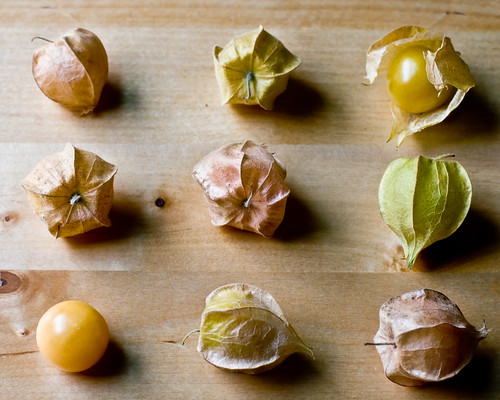
One day in Montreal, Dave and I went to the Jean Talon
Marketplace near Little Italy. On either side of us wine vendors passed out
samples and wedges of smelly cheese were plopped onto scales. We stopped in
front of a produce stand that displayed cartons of an unusual green fruit with
a papery outer layer, similar to onion skin.
“I think it’s a tomatillo,” I said, recalling a similar
fruit I had on one of my last nights in Prague with a kiwi-like flavor.
A French-speaking man gave us each a piece of the alleged
tomatillo to sample. Peeling the skin off, Dave asked the name of the fruit.
The French-speaking man sent us an English-speaking man to deal with our
English speaking.
“It’s a ground cherry,” the English-speaking man announced,
baffling us both, for neither of us had heard of a ground cherry before. “It’s
called a ground cherry because you don’t pick them off the tree. You wait for
them to fall on the ground. That’s when you know they’re ripe.”
The French-speaking man pushed a half empty-carton of ground
cherries towards me and I picked them up. Dave and I each took one cherry and
attempted to return the carton.
“No, take them,” the English-speaking man insisted. I took
the free food. “He gave them to you. And they’re good for you, but especially for
you.” He pointed to Dave.
“I eat a carton of these every day,” the English-speaking
man continued. “They’re good for the prostate.”
I passed the carton of ground cherries to Dave. Perhaps he
needed them more than I did.
Sunday, September 18, 2011
Montreal: Puffins, Penguins, and Pitcher Plants

If I ate too much in Montreal, I must have cancelled it out
walking. Montreal has some delightful brightly colored buildings and old architecture.
Rue Duluth, off of Boulevard St. Laurent, was a street of eccentric facades
with elaborate murals and a restaurant resembling a ship. We found a shop
devoted entirely to things made of alpaca wool, including small alpacas.

On the second day in Montreal, Dave and I wandered the paths
of Montreal’s Botanical Gardens. Inside of the conservatories, we saw the flora
of the rainforests and bananas growing in a peculiar upward fashion that is
apparently normal for bananas.

From across a room a spotted a large terrarium containing
some of my pitcher plant Angelina’s estranged cousins.


I didn’t have to imagine the sort of insects that would get
swallowed up in those pelican-mouthed plants; I saw them shortly after in the
Insectarium. Most of the bugs in the Insectarium were tacked up under glass, save
a few startling tarantulas tickling the sides of their tanks. Some of the
tacked up critters made me wonder if Fern Gully was based on a true story.
Nature never ceases to astound me.
The Botanical Gardens provided me with dozens of
opportunities to dust off my French skills, to Dave’s dismay. I used every
opportunity to ask the whereabouts of the W.C. and order ice cream flavors that
I don’t know the words for. Every time I got stuck, I found myself looking to
Dave as though he would explain the whole situation in Spanish and everything
would be alright.
We spent about a quarter of our time outdoors
photographing this fat squirrel eating cookies.


After a long walk through the bonsai forest and the thrills
of the shrub garden, we decided to take a dinner break. Chinese lanterns are
lit up throughout the botanical garden when the sun goes down and I intended to
see them glow. We asked a woman at the information desk where we could have a
quick dinner before the lanterns lit up, and the woman at the desk directed us
to Sherbrook, an alleged commercial street full of eateries. This barren
highway called Sherbrook led to a steakhouse in one direction and tumble weeds
and broken dreams in the other.
By the time we gave up on walking this road to nowhere, we were
too famished to look at anything at all.
Dave and I spend the rainy last day in Montreal at the
Biodome, a giant dome in Olympic Park that replicates five different ecosystems
and fills them with native plants, birds, and the occasional porcupine. As with
any animal sanctuary, the best room replicated the artic climate and was
populated by penguins. Luckily for us, we arrived at feeding time for the
aquatic birds.
The puffins are my favorite. They flap their wings like undersea pterodactyls when they swim after scattered scallop shells. When on land, Dave sees the look of British royalty in their faces, forced to endure the humiliation of sharing a room with the common mure.


Subscribe to:
Posts (Atom)